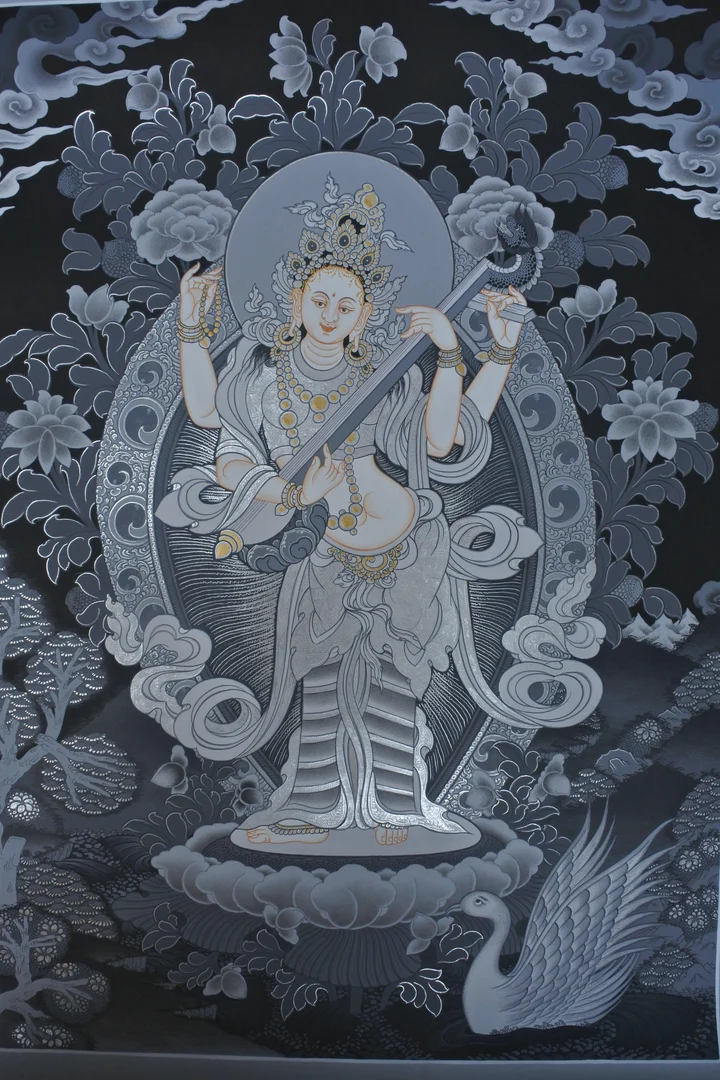
Thangka painting is a highly revered form of art that originates from Tibet. Rooted deeply in Buddhism, these paintings are not just a visual representation but a profound spiritual tool. They serve as guides for meditation and a means to depict intricate stories of deities, teachings, and mandalas.
History of Thangka Painting
Thangka paintings date back to over a thousand years. They originated in the Himalayan regions, especially Tibet, Nepal, and Bhutan. The art form blossomed during the rise of Buddhism and was used to teach and preserve the teachings of Buddha. The paintings often adorn the walls of monasteries and homes, each telling a unique story.
Materials and Techniques Used in Thangka
Creating a Thangka is a meticulous process. The canvas, usually made of cotton or silk, is prepared by applying a mixture of gesso to make it smooth. Natural pigments derived from minerals and plants are used to give the painting its vibrant colors. Gold and silver are sometimes added for an extra touch of brilliance. Artists follow strict guidelines, ensuring every stroke, color, and symbol aligns with traditional methods.
Symbolism in Thangka Painting
Each Thangka carries profound meaning. From Buddha figures to mandalas, every element in the painting holds symbolic value. The colors are carefully chosen—red for strength, blue for knowledge, and white for peace. The use of sacred geometry in the creation of mandalas represents the universe, inviting deeper meditation and understanding.
The Spiritual Purpose of Thangka
Thangka paintings are more than just art. They are used in rituals, ceremonies, and meditation practices. Their purpose is to inspire and guide individuals on their spiritual path. The intricate details act as visual aids to help practitioners focus their minds during meditation. Monks, devotees, and even laypersons utilize these paintings to gain insights into Buddhist teachings and to strengthen their faith.
Preserving the Tradition of Thangka Painting
As the world modernizes, the tradition of Thangka painting faces challenges. However, efforts are being made to preserve this ancient art form. Schools and institutions in Nepal and Tibet train young artists to carry on the legacy. Many organizations are working to ensure that the skills and spiritual significance of Thangka painting are passed down to future generations.
Visit our store at:
https://www.pinterest.com/ArtsNepalGallery/
https://artsnepalgallery.com/
Conclusion
Thangka painting is a unique blend of art, spirituality, and culture. Its delicate beauty, combined with its deep meaning, makes it an important part of Buddhist heritage. For centuries, these paintings have played a crucial role in guiding individuals toward enlightenment, and they continue to inspire people worldwide.