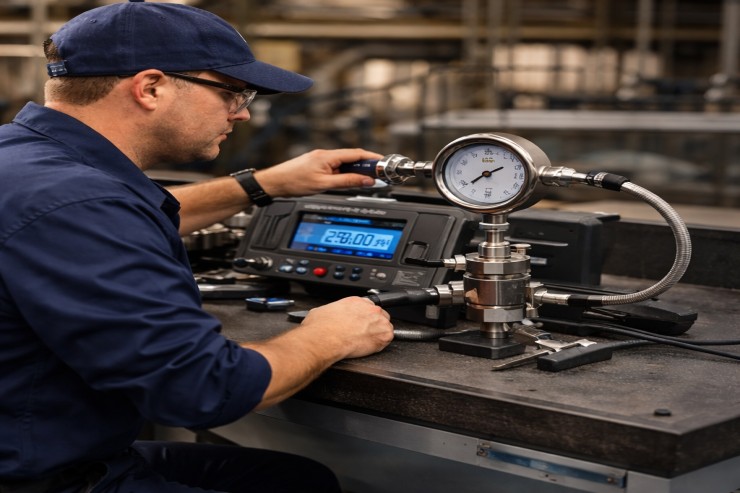
In the modern industrial landscape, precision is more than just a goal—it is a foundational requirement. Whether you are operating in the pharmaceutical sector, petrochemical processing, or heavy manufacturing, the data produced by your weighing and measurement equipment dictates the quality of your output, the safety of your facility, and the integrity of your brand. However, even the most advanced equipment is subject to “drift,” a natural phenomenon where environmental factors, mechanical wear, and frequency of use cause instruments to lose their accuracy over time.
This is where professional Calibration Services Houston TX become an indispensable asset. Regular calibration ensures that your instruments consistently provide readings that align with recognized national or international standards. By investing in these services, businesses can transition from a reactive “fix-it-when-it-breaks” mentality to a proactive strategy centered on measurement confidence.
The Science of Measurement Confidence
Measurement confidence is the degree of certainty that a specific reading is accurate and repeatable. Without a verified baseline, a measurement is essentially an educated guess. In high-stakes environments, such as those found in the Texas Gulf Coast industrial corridor, a “guess” can lead to catastrophic batch failures or regulatory non-compliance.
When you utilize professional Calibration Services Houston TX, you are essentially performing a “health check” on your equipment. Technicians compare your instrument’s performance against a reference standard of known accuracy. Any deviation is documented, and the equipment is adjusted to return to its optimal state. This process doesn’t just fix errors; it quantifies uncertainty, giving operators the peace of mind that their data is legally and technically defensible.
The Risks of Ignoring Calibration
The consequences of neglecting regular calibration extend far beyond a few “off” numbers. For many organizations, the hidden costs of inaccurate measurements can erode profitability over time.
- Safety Hazards: In industries involving pressure vessels or chemical mixing, an inaccurate scale or sensor can lead to volatile reactions or structural failures.
- Product Waste: Over-filling containers due to a faulty scale leads to “product giveaway,” while under-filling leads to consumer dissatisfaction and potential legal action.
- Regulatory Fines: Agencies like OSHA, ISO, and the FDA require documented proof of equipment accuracy. Missing these benchmarks can result in heavy fines and suspended operations.
To mitigate these risks, partnering with an expert provider like Industrial Scale & Measurement ensures that your facility remains compliant and your equipment remains reliable.
Key Benefits of Consistent Calibration
1. Enhanced Operational Efficiency
When your measurements are accurate, your processes run smoother. You spend less time troubleshooting inconsistent results and more time focusing on production. Professional Calibration Services Houston TX help identify equipment that may be nearing the end of its lifecycle, allowing for planned replacements rather than emergency downtime.
2. Adherence to Global Standards
In a globalized economy, many clients require suppliers to be ISO/IEC 17025 accredited. This accreditation proves that a laboratory has the technical competence to produce valid results. By scheduling regular Calibration Services Houston TX, you ensure your documentation is audit-ready at a moment’s notice.
3. Long-Term Cost Savings
While there is an upfront cost to professional servicing, it pales in comparison to the cost of a product recall or a workplace accident. Calibration extends the life of your hardware by ensuring it is operating within its intended mechanical tolerances.
Why Local Expertise Matters
Houston is a unique hub for the energy and manufacturing sectors. The environmental conditions—high humidity and fluctuating temperatures—can accelerate equipment drift. Working with a local specialist like Industrial Scale & Measurement provides the advantage of technicians who understand the specific stresses placed on equipment in this region.
Furthermore, choosing Calibration Services Houston TX means faster response times for on-site visits, reducing the window of time your equipment is offline. Whether it is a bench scale in a laboratory or a high-capacity truck scale at a shipping terminal, local experts provide the tailored precision required for the Texas industrial climate.
Final Thoughts: Building a Culture of Precision
Measurement confidence isn’t achieved through a single appointment; it is maintained through a culture of precision. By integrating Calibration Services Houston TX into your standard operating procedures, you protect your bottom line and your reputation. Accurate data leads to better decision-making, higher quality products, and a safer work environment for everyone involved.
If you are ready to verify the accuracy of your weighing and measurement systems, it is time to consult with the experts. Contact us today to schedule a comprehensive evaluation of your equipment.
Frequently Asked Questions (FAQs)
What is the difference between calibration and repair?
Calibration is the process of comparing an instrument’s readings to a known standard to verify accuracy and making minor adjustments if necessary. Repair involves fixing a broken or malfunctioning component within the instrument to make it operational again.
How often should I schedule calibration?
The frequency depends on several factors: the manufacturer’s recommendation, the frequency of use, the environment (e.g., extreme heat or vibration), and the criticality of the measurements. Most industrial standards suggest an annual or semi-annual schedule.
Can calibration be performed on-site?
Yes, many professional providers offer mobile calibration units or on-site technicians to service heavy equipment that cannot be easily transported, such as floor scales or large hopper systems.
What is “drift” in measurement?
Drift is the gradual degradation of an instrument’s accuracy over time. It can be caused by environmental changes, aging electronic components, or mechanical wear and tear from repeated use.
Why is an ISO/IEC 17025 accreditation important?
This accreditation is the single most important standard for calibration and testing laboratories. It demonstrates that the provider is technically proficient and capable of generating accurate and precise data, which is essential for international trade and regulatory compliance.