Token Development Use Cases Across Industries
Token development has emerged as a transformative technology in recent years, reshaping the way businesses operate, interact with customers, and manage digital assets. From blockchain-based startups to large enterprises, the use of tokens has expanded far beyond cryptocurrency trading. Businesses are now leveraging token development to create secure, transparent, and programmable digital representations of assets, rights, and rewards. These tokens offer unique advantages such as traceability, fractional ownership, automation through smart contracts, and global accessibility.
The flexibility of token development allows it to be adapted across a wide range of industries. By converting real-world or digital assets into tokens, businesses can unlock new revenue streams, enhance operational efficiency, and provide innovative experiences to users. This article explores the key use cases of token development across various sectors, demonstrating how organizations are integrating blockchain-based token solutions to drive growth and innovation.
Token Development in Finance
The financial industry is one of the earliest adopters of token development, particularly through the emergence of digital currencies and stablecoins. Tokenized financial instruments can represent anything from bonds, stocks, or commodities to customer loyalty points. Token development enables faster settlement times, reduces reliance on intermediaries, and improves transparency in financial transactions.
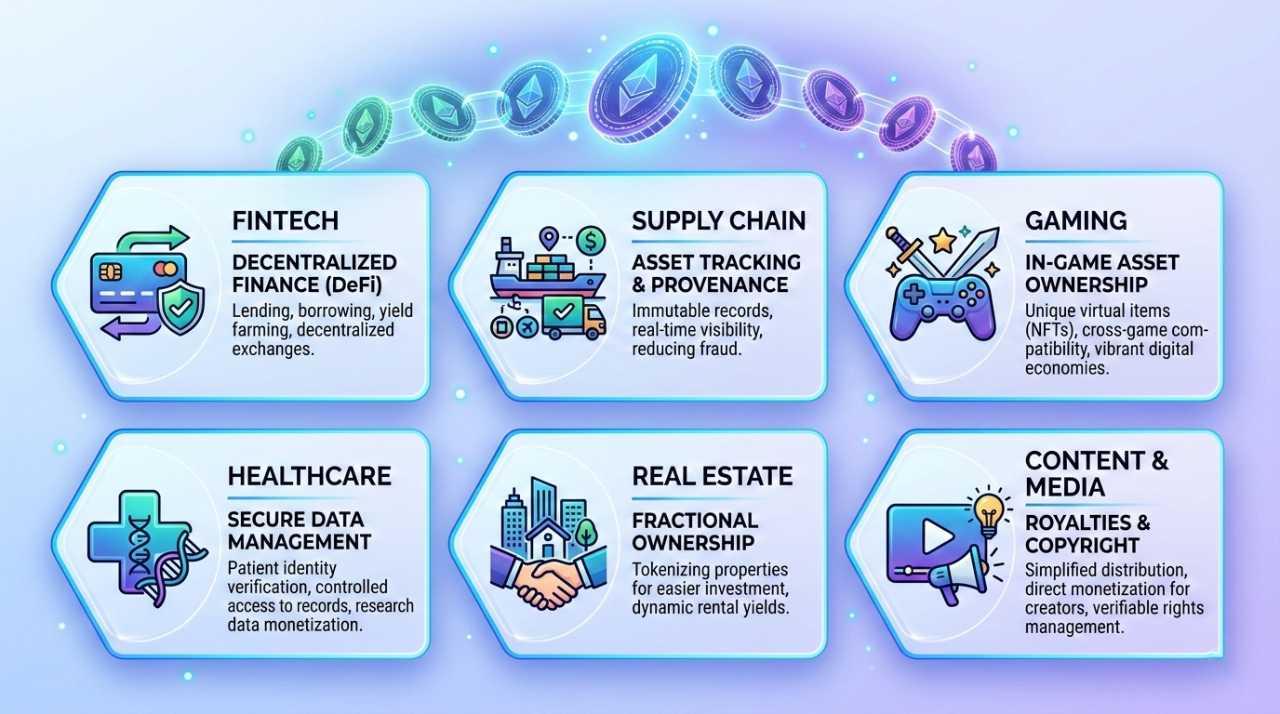
Banks and fintech companies are increasingly using token development for security tokens, which represent shares in real-world assets. These tokens allow fractional ownership, enabling investors to access high-value assets such as real estate or infrastructure projects with minimal capital. Token development also facilitates decentralized finance (DeFi) platforms, where users can lend, borrow, and trade assets in a trustless, transparent environment.
Another significant use case in finance is cross-border payments. Token development allows for faster, cost-effective international transfers compared to traditional banking methods, reducing fees and delays caused by intermediaries. By leveraging blockchain-based tokens, financial institutions can provide enhanced security and real-time transaction verification, improving overall efficiency.
Token Development in Real Estate
The real estate industry has begun exploring token development to digitize property ownership and streamline investment processes. Traditionally, real estate transactions involve lengthy legal procedures, high entry costs, and limited liquidity. Token development transforms properties into fractionalized digital assets, allowing investors to purchase small portions of a property.
This fractional ownership model expands access to real estate investments, attracting a broader range of participants. Investors can trade property tokens on digital marketplaces, creating liquidity for previously illiquid assets. Token development also ensures transparency, as all ownership records and transactions are stored on an immutable blockchain ledger.
Real estate developers benefit from token development by raising capital more efficiently. Instead of relying solely on traditional financing methods, they can issue tokens representing shares of a property project, enabling investors to participate in funding while retaining flexibility in ownership and trade.
Token Development in Supply Chain Management
Token development is revolutionizing supply chain management by improving transparency, traceability, and accountability. Each stage of a product’s journey can be represented through digital tokens, providing a verifiable record of origin, handling, and transportation. This is particularly valuable in industries where authenticity and compliance are critical, such as pharmaceuticals, food, and luxury goods.
By leveraging token development, businesses can track products from production to delivery, reducing fraud and counterfeiting. Smart contracts linked to tokens enable automated compliance checks, quality assurance, and payments between suppliers, distributors, and retailers. This increases operational efficiency while reducing administrative overhead.
Token development also allows customers to verify the authenticity of the products they purchase. For example, luxury brands can issue tokens for high-value goods, enabling buyers to confirm origin and ownership history. This enhances trust and brand credibility while addressing concerns over counterfeit products in the market.
Token Development in Healthcare
In the healthcare sector, token development provides secure methods for managing sensitive medical data, patient records, and pharmaceutical supply chains. Tokens can represent patient consent, access rights, or digital health records, ensuring that information is only accessible to authorized parties.
Hospitals and healthcare providers can use token development to streamline billing, insurance claims, and medical research participation. For instance, tokens can represent shares in clinical trials, enabling decentralized participation and ensuring transparency in trial results. Token development also facilitates secure data sharing between providers and research institutions without compromising patient privacy.
Moreover, token development can improve pharmaceutical supply chain management by ensuring traceability of drugs from manufacturing to distribution. Each batch can be tokenized, allowing real-time monitoring, reducing the risk of counterfeit drugs, and ensuring regulatory compliance.
Token Development in Gaming
The gaming industry has seen rapid adoption of token development, particularly with the rise of blockchain-based games and play-to-earn (P2E) models. Game assets, including characters, weapons, skins, and in-game currency, can be represented as tokens, providing players with verifiable ownership and the ability to trade assets across platforms.
Token development enables gamers to monetize their in-game achievements by selling or exchanging tokens for other digital assets or cryptocurrencies. It also encourages community engagement, as developers can issue tokens as rewards for participation, competitions, or achievements.
In addition, token development facilitates the creation of decentralized gaming marketplaces, where players can buy, sell, or lease digital assets. This ecosystem reduces reliance on centralized game developers for asset management and provides a secure, transparent platform for trading game tokens.
Token Development in Art and Entertainment
Token development is transforming the art and entertainment sectors by enabling digital ownership and new revenue models. Artists and creators can tokenize artworks, music, films, and other intellectual properties to create verifiable proof of ownership and scarcity.
Through token development, fractional ownership of high-value art pieces becomes possible, allowing multiple investors to hold a share of an artwork. Smart contracts can automate royalty payments, ensuring that creators receive fair compensation whenever their digital assets are sold or used commercially.
Token development also supports the emergence of non-fungible tokens (NFTs), which represent unique digital assets on the blockchain. Musicians, filmmakers, and digital artists can leverage NFTs to sell limited editions of their work directly to collectors, eliminating intermediaries and establishing direct relationships with audiences.
Token Development in Retail and Loyalty Programs
Retailers are adopting token development to enhance customer engagement and loyalty programs. Tokens can represent reward points, vouchers, or membership rights, enabling seamless tracking, redemption, and transfer across platforms.
Token development allows businesses to create more flexible and personalized loyalty programs. For example, customers can trade or exchange tokens with others, or combine them to unlock premium offers. Blockchain ensures that reward tokens are secure, verifiable, and tamper-proof, reducing fraud and misuse.
Retailers also benefit from token development by gaining deeper insights into customer behavior and spending patterns. Data stored on the blockchain can be analyzed to tailor marketing campaigns and product offerings, enhancing customer satisfaction and retention.
Token Development in Energy and Sustainability
The energy sector is increasingly leveraging token development to promote sustainability and optimize energy distribution. Renewable energy projects, such as solar or wind farms, can tokenize energy units, enabling decentralized participation and trading of energy credits.
Token development facilitates peer-to-peer energy trading, where consumers and producers can buy or sell energy directly using digital tokens. This approach reduces reliance on centralized energy providers and enhances efficiency in energy distribution.
Additionally, token development supports carbon credit trading and sustainability initiatives. Companies can tokenize carbon offsets and track their impact transparently on a blockchain, enabling accountability and incentivizing environmentally responsible behavior.
Token Development in Education
Educational institutions are exploring token development to improve credential verification, course access, and student engagement. Tokens can represent diplomas, certificates, or digital credentials, providing a secure and verifiable method for sharing academic achievements.
Token development enables lifelong learning ecosystems, where students can earn tokens for completing courses, participating in workshops, or contributing to research projects. These tokens can be exchanged for advanced learning opportunities or professional certifications.
Blockchain-based tokens also reduce administrative overhead for institutions by streamlining record-keeping and verification processes, ensuring authenticity and reducing fraud in academic credentials.
Token Development in Logistics and Transportation
In logistics and transportation, token development offers solutions for tracking shipments, automating payments, and ensuring compliance with regulations. Each package or shipment can be represented as a token, recording its journey on the blockchain.
Token development enables real-time visibility for logistics providers, customers, and regulatory authorities. Smart contracts can automate payments upon delivery, trigger alerts for delays, and ensure compliance with customs and transport regulations.
By integrating token development into logistics systems, companies can improve efficiency, reduce errors, and enhance trust with customers and partners.
Conclusion
Token development is rapidly transforming industries by enabling secure, transparent, and programmable digital representations of assets, rights, and rewards. From finance and real estate to gaming, art, and supply chain management, businesses are discovering innovative ways to leverage token development to enhance accessibility, improve operational efficiency, and create new revenue opportunities.
As blockchain technology continues to mature, the applications of token development are likely to expand further, offering even more possibilities for businesses to modernize processes, engage users, and unlock value across industries. Token development represents a bridge between traditional systems and digital innovation, demonstrating the potential to reshape the way assets are owned, managed, and traded worldwide.